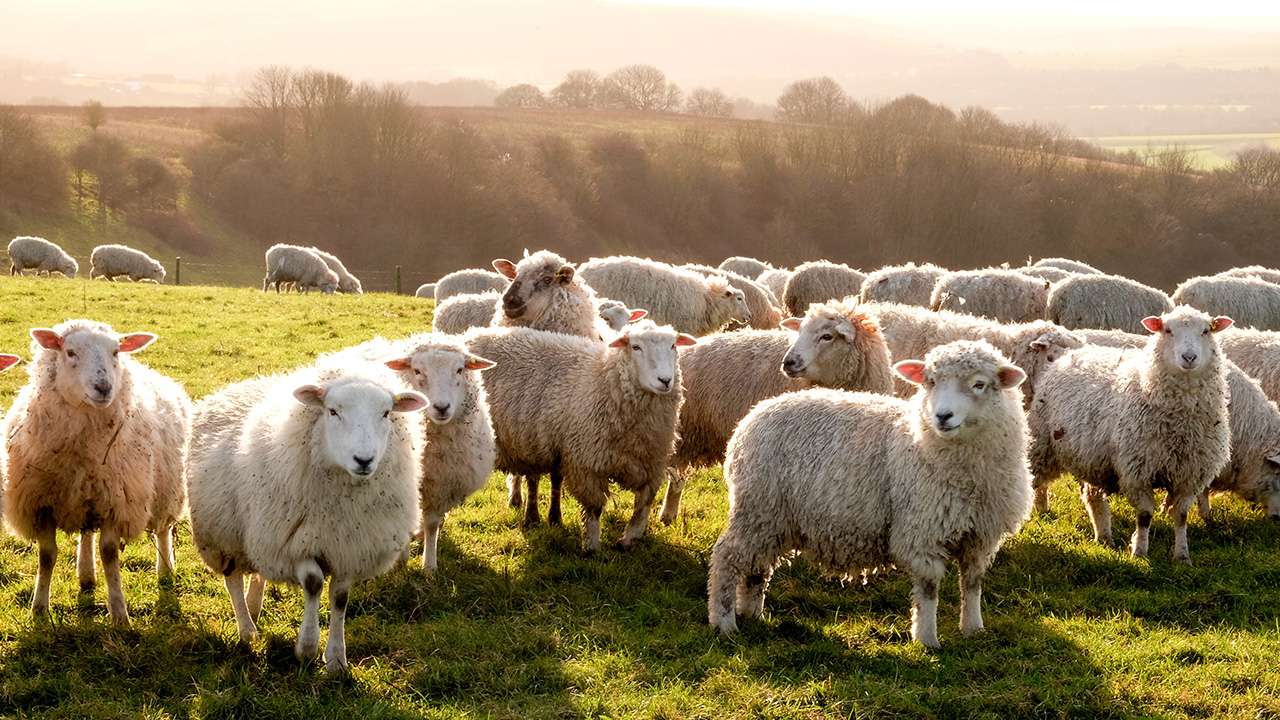
Due to the reduced profitability in traditional farming activities, many farmers are turning to other methods, such as contract farming or repurposing land and buildings for alternative uses, in order to provide more stable income streams.
Some common examples of land transactions/supplies farmers might make with land and property are:
- Land rental - (i.e. grazing land, rental of land under Farm Business Tenancies (FBT’s), renewable energy installations etc.)
- Rental of storage facilities
- Furnished holiday lets
- Letting buildings to small businesses/for use as offices
- Barns as event venues/wedding venues
- Contract farming
The VAT treatment of the supply of land and buildings varies and is unique to each individual’s circumstances. Combined with the fact that the majority of traditional farming activities are zero-rated, farmers may end up making a mixture of taxable and exempt supplies (and even some supplies that are outside the scope of VAT).
Example:
For instance, let’s take an arable farmer who also makes the following supplies to separate third parties:
- The rental of an empty barn that will be used as a storage facility – this is a standard-rated supply
- The rental of land, which has not been opted to tax* – this is an exempt supply
*An ‘Option to tax’ (OTT) is an election made to HMRC to allow a business to change, what would usually be an exempt supply of land/a building, into a taxable one. You may be wondering ‘why on earth would I want to voluntarily charge VAT?’. We will come back to this question later…
Going back to our example, the growing and harvesting of crops to be sold unprocessed and the rental of the barn are both taxable supplies (albeit the arable income is zero-rated). The rental of the un-opted land is an exempt supply which make the business partially exempt.
It is also worth mentioning that extra considerations will need to be made for businesses who make supplies that are outside the scope of VAT.
Obligations of a partially exempt business
Partially exempt businesses need to review their input VAT recovery to ensure that it is proportionate to the level of taxable supplies the business makes. However, just because you make some exempt supplies, doesn’t mean that you are going to lose out on some/all your input VAT recovery. There is a threshold, known as ‘the de minimis’, whereby if your total exempt VAT falls below this threshold, you are able to recover all of your input VAT.
In simple terms, if VAT on expenses is directly related to VATable supplies, then the VAT can be claimed, if to non-VATable supplies, it can’t. If it is an overhead that may relate to both, then a partial-exemption calculation must be prepared. This calculation will also help determine whether you have met the de-minimis limit.
Businesses are required to prepare partial exemption calculations on a quarterly basis, followed by an annual adjustment calculation at the end of the VAT year (which is the same principle as the quarterly partial exemption calculation but, based on the data for the year).
In summary, these calculations determine how much of your ‘residual’ input VAT (i.e. input VAT that cannot be directly attributed to either taxable or exempt supplies) you can recover.
How could this be different?
Now, going back to the question relating to opting to tax land/property of ‘why would I want to voluntarily charge VAT?’. As you can see, making a mixture of taxable supplies means that 100% of input VAT recovery is not guaranteed.
Now, if the farmer in our example had opted to tax the land that they were renting, all their supplies would be taxable, and all business-related input VAT incurred would be recoverable.
Summary
This is in no way a message to begin opting to tax all your owned land and properties. Because, the truth is, an option to tax is not always the most beneficial solution and there are many important considerations to be made before doing so (particularly if a sale of the land in the future is a possibility, as this can be disadvantageous).
The key message here is to ensure you have the correct VAT treatment of the supplies that you are making, especially where land or property is concerned. Secondly, check whether you are making a mixture of taxable and exempt supplies to ensure you are complying with your partial exemption obligations.
If you have any queries about the VAT treatment of the supplies that you are making or need our assistance with partial exemption calculations, please get in touch with a member of the team.
If you have any questions about the above, or would like more information specific to your circumstances, please enter your email address below and we will get in touch:
Related View All



Our Accreditations and Memberships